I used to think choosing a lens was purely about image quality. Sharpness charts, bokeh comparisons, T-stop bragging rights. And sure, all of that matters. But the lens that genuinely changed how I work didn’t win me over with a spec sheet. It won me over because it made everything around the actual shooting faster.
The DZOFilm Vespid Prime 40mm: A Cine Lens That Makes Sense
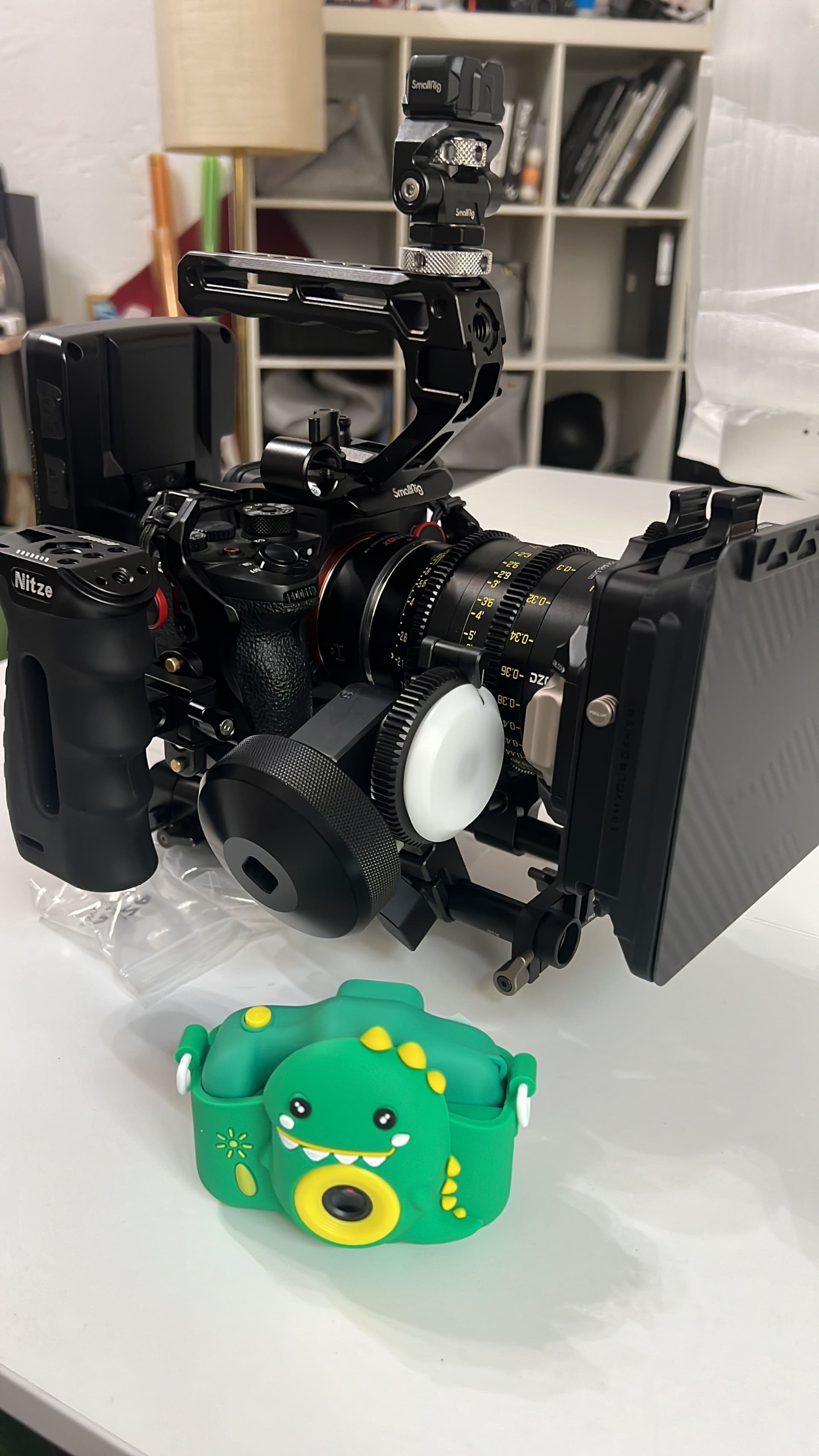
At around $799 to $1,400 depending on where you buy it, the DZOFilm Vespid Prime 40mm T2.1 sits in a sweet spot that barely existed a few years ago. Genuine cine-build quality without the cine-lens price tag. PL mount with an included EF adapter, a 16-blade aperture for beautifully rounded bokeh, full-frame coverage up to a 46.5mm image circle, and minimal focus breathing. Its compact 80mm front diameter fits standard cine matte boxes, and the lightweight build makes it a natural fit for gimbals, drones, and handheld work.
I shoot primarily on Sony A7S III and A7 IV bodies. Slapping a PL cine prime on a mirrorless camera via adapter is a nice thing. The 40mm focal length is versatile enough to be your only lens on a stripped-down doc shoot, and the cine housing means smooth, repeatable focus pulls without hunting.
Worth noting: DZOFilm has since released the Vespid II line with faster apertures, lens metadata support, and a refined optical design. If you’re buying new in 2026, it’s worth comparing both generations. The original is now an even better value, and the II brings features that modern cinema cameras increasingly expect.
Why Workflow, Not Just Image
Here’s what actually changed: I stopped swapping lenses on set. For corporate interviews, mini-docs, and behind-the-scenes work, the 40mm covers 80% of what I need. That means less time fumbling with lens caps, fewer sensor dust issues, and a rig that stays balanced. The consistency of the cine housing also means my focus marks don’t shift between takes. A small thing that adds up massively across a shoot day.
The Rest of My Glass (And Why Each Earns Its Spot)
The Vespid 40mm is my go-to, but it’s not my only lens. Here’s the supporting cast.
Sigma 28 to 70mm f/2.8 DG DN. This is the zoom I grab when flexibility matters more than character. Paid-project run-and-gun, events, anything where I can’t control the distance. Sharp, fast autofocus, and the range covers wide-to-portrait in one barrel. The Sigma 16 to 28mm fills the ultra-wide gap for real estate, establishing shots, and tight interiors. Together, these two Sigmas cover an absurd range for remarkably little money.
Zeiss Batis 25mm f/2. My "mood lens." The rendering on this thing is painterly in a way I can’t fully explain with specs. It’s not the sharpest 25mm on the market, but the way it handles contrast and fall-off gives footage a filmic quality that requires less grading to look cinematic. I reach for it on personal projects and narrative work.
Sony FE 70 to 200mm f/2.8 GM II. Expensive? Yes. Worth it? Absolutely. Sony redesigned the AF system for up to 4x faster tracking, added a de-clickable aperture ring for smooth iris pulls on video, and cut the weight by nearly 30% compared to the first generation. I use it for event coverage, wildlife B-roll, and any situation where I need reach without sacrificing speed. The focus breathing is so well-controlled it almost feels like a cine lens. If you only buy one premium lens, this might be it.
The iPhone Factor
I’ll say something controversial: my iPhone 16 Pro has replaced a second camera body on certain jobs. For social media content, BTS footage, and quick reference shots, the quality is frankly ridiculous. The 4K ProRes workflow means the footage cuts right in alongside A7S III material in the timeline. Is it a replacement? No. Is it a workflow accelerator? Absolutely.
Pick Lenses for Your Workflow, Not Your Ego
The internet will tell you to buy the sharpest, fastest, most expensive glass you can afford. I’d tell you to buy the lens that removes friction from your shooting day. For me, that’s a cine prime that lets me work faster, lighter, and more consistently. Your answer might be different, but the question should always be the same: does this lens make my work better, or just my spec sheet?